

Designing for Care on the Move
0 →1 native mobile learning experience that improved engagement and enabled clinicians to learn anytime, anywhere, even offline.
Turning a desktop learning platform into a mobile-first experience.
MedBridge is a healthcare platform used by thousands of students, preceptors, clinicians, and healthcare organizations for continuing education and professional development.
As learning increasingly shifted from desktop to mobile, engagement began declining because the experience wasn't designed for interruptions, unreliable connectivity, or learning on the move.
I led the design of a native mobile experience across iOS and Android to better support how users actually learn.
Business Context
Aligning user needs with business goals.
Business Goals
Improve engagement and retention
Increase mobile adoption
Expand access through offline learning
User Needs
Learn in short sessions
Resume seamlessly after interruptions
Access content with unreliable connectivity
Track learning progress with confidence
The Challenge
Research showed that engagement wasn't declining because users lacked motivation, it declined when learning moved into real-world mobile contexts.
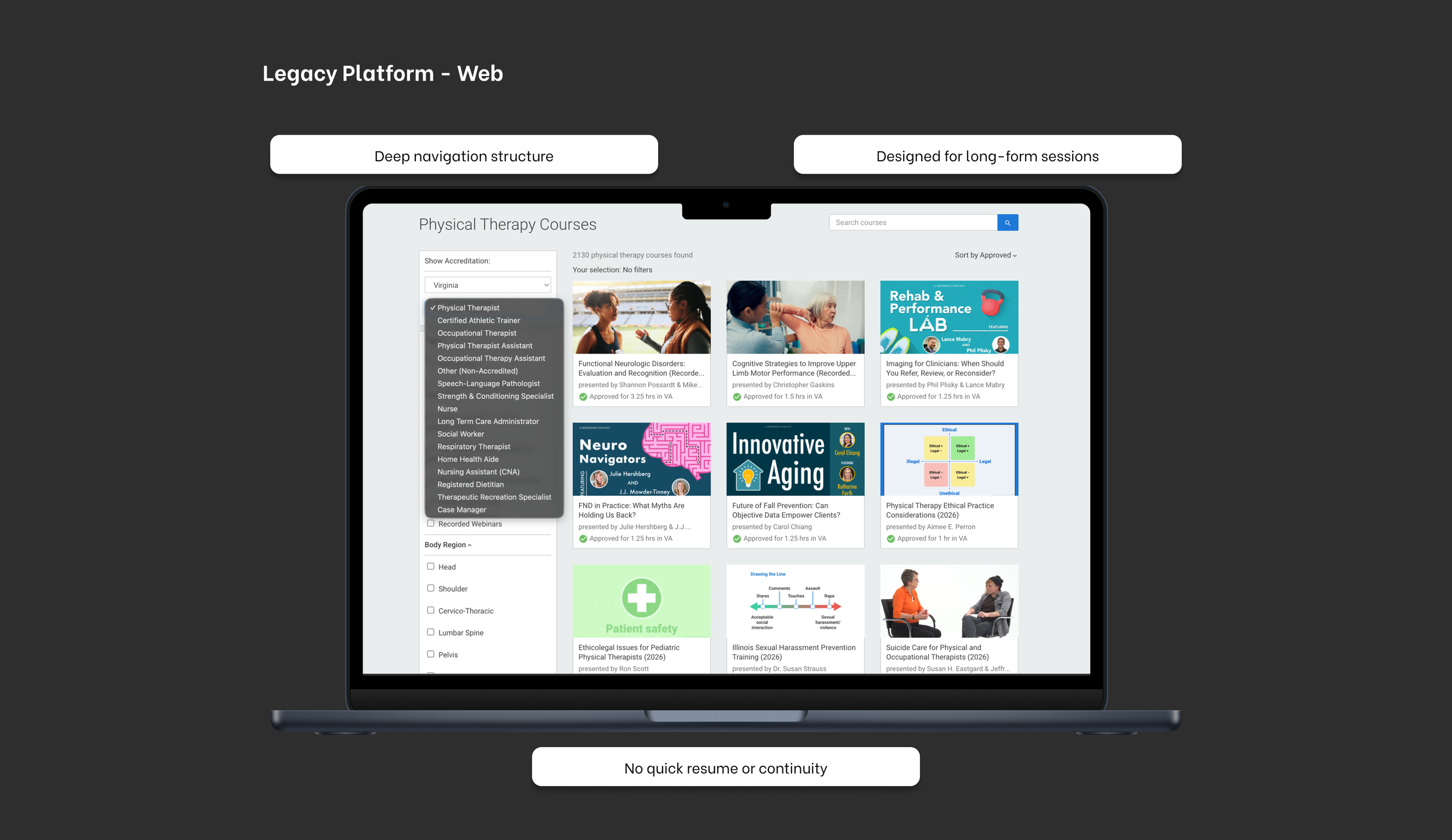
Desktop workflows didn't translate to mobile behavior.
Users struggled to resume interrupted sessions, navigate complex workflows, and continue learning without reliable internet access.
Solutioning
Designing for continuity, not just smaller screens.
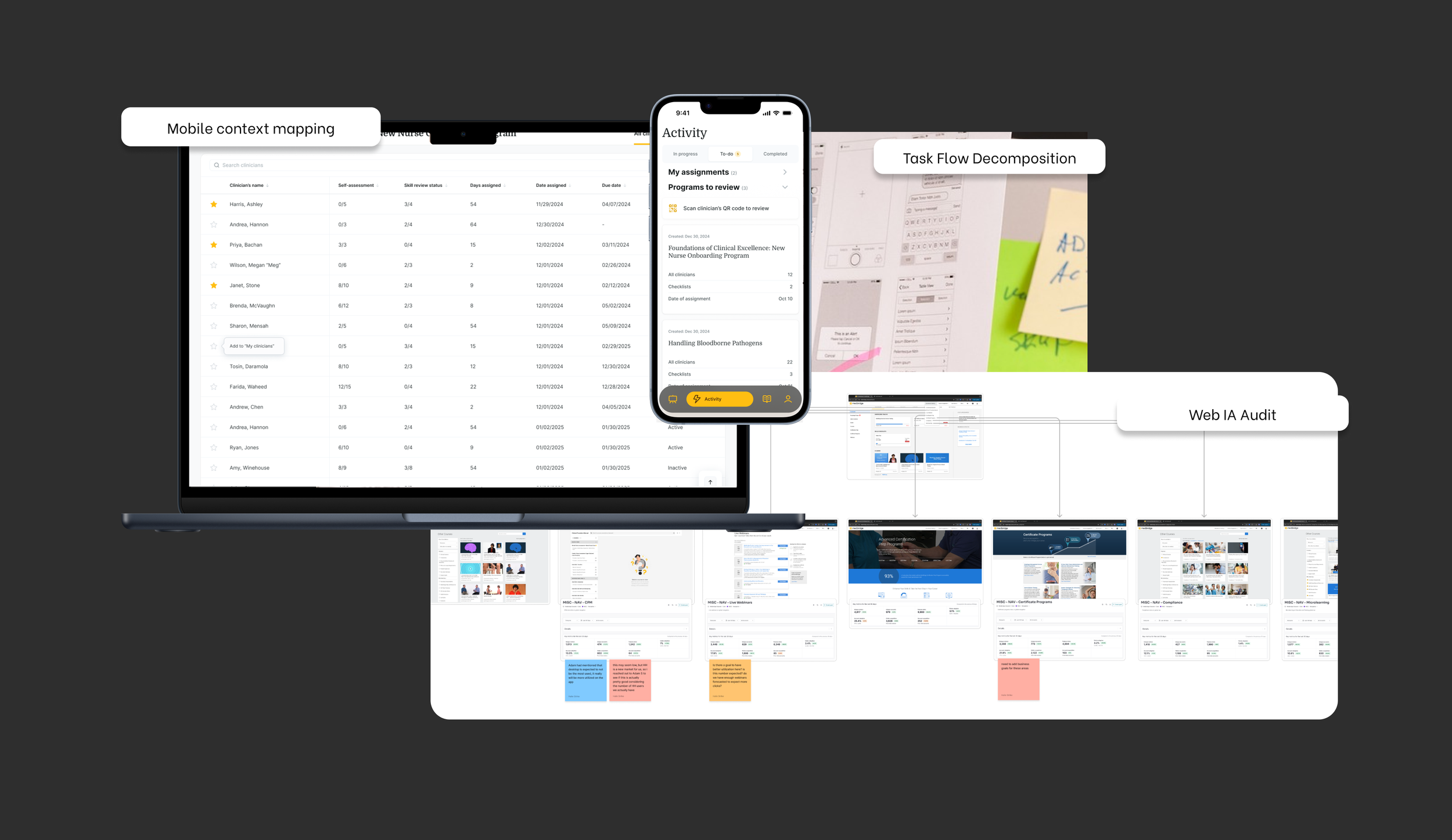
Rather than adapting desktop layouts, I restructured the experience around mobile behavior.
Key design principles included:
Mobile-native navigation
Progress visibility
Offline-first learning
Flexible audio playback
To accelerate early exploration, I used AI-assisted workflows :
to compare interaction patterns and navigation concepts before validating them through usability testing and collaboration with product and engineering.
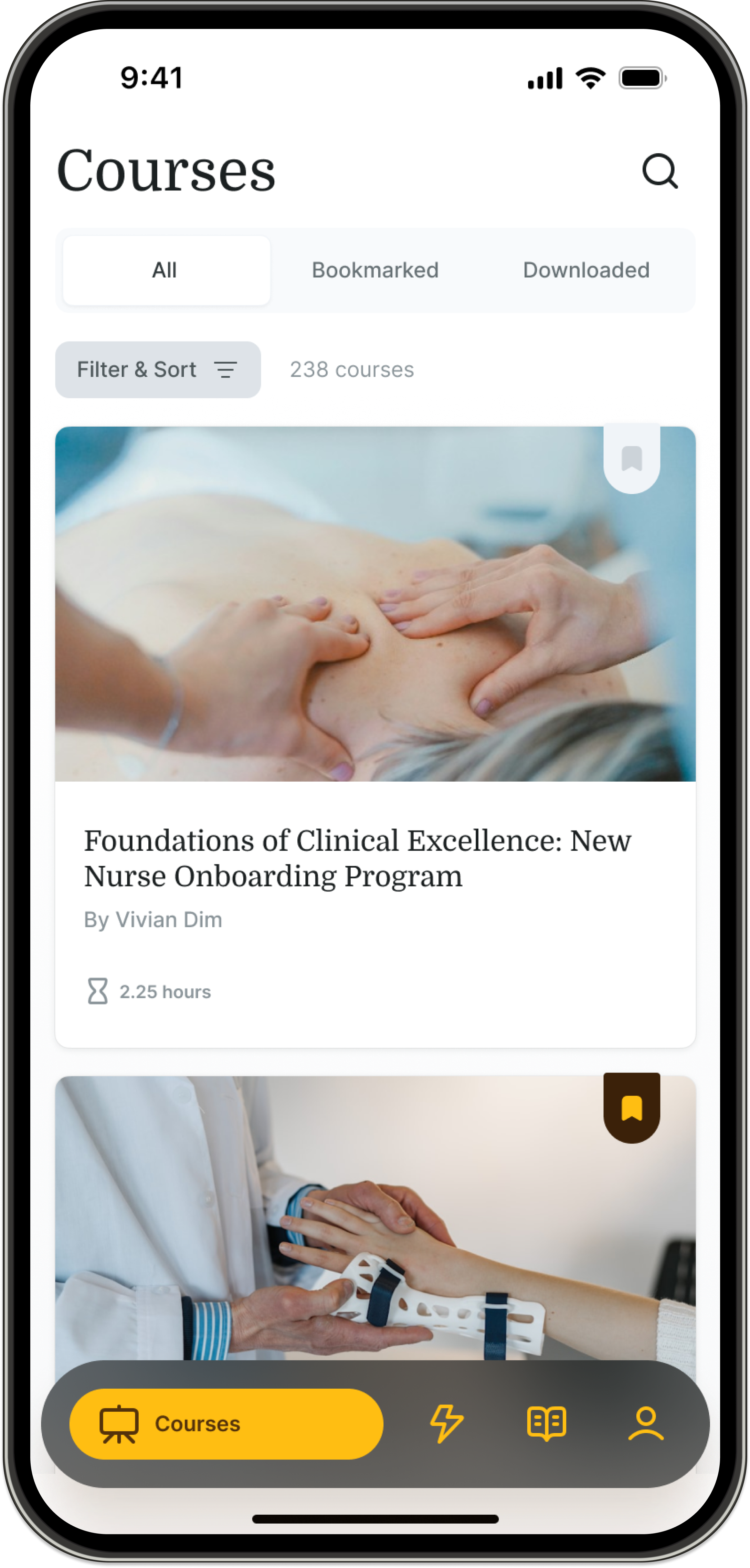
Final Experience
Designed across iOS and Android with responsive support for tablet experiences, creating a scalable learning ecosystem across devices.
Delivery
Delivered through tight collaboration and system-level execution with product and engineering.
Outcomes
Creating value for users and the business
1. 35%+ increase in app downloads within the first six months, expanding adoption of the new mobile experience.
4. Enabled offline learning, expanding access for users in low-connectivity and mobile environments.
2. Improved course completion rates, supporting learner retention and subscription value.
3. Increased mobile engagement, helping establish mobile as a primary learning platform.

Future + Reflection
This foundation unlocks more adaptive learning experiences.
Personalized recommendations
Smarter syncing across devices
AI-assisted learning
The biggest lesson wasn't how to design for smaller screens, it was learning how to design around real-world behavior.
Want to see how these decisions evolved?
During interviews, I walk through the research, trade-offs, stakeholder alignment, and engineering decisions that shaped the final product.