
Leading Product Discovery for AI-Assisted Care Delivery
Designing a 0 →1 AI-assisted motion analysis experience that helped patients recover more confidently while enabling clinicians to deliver scalable remote care.
Overview
Extending digital recovery beyond the clinic.
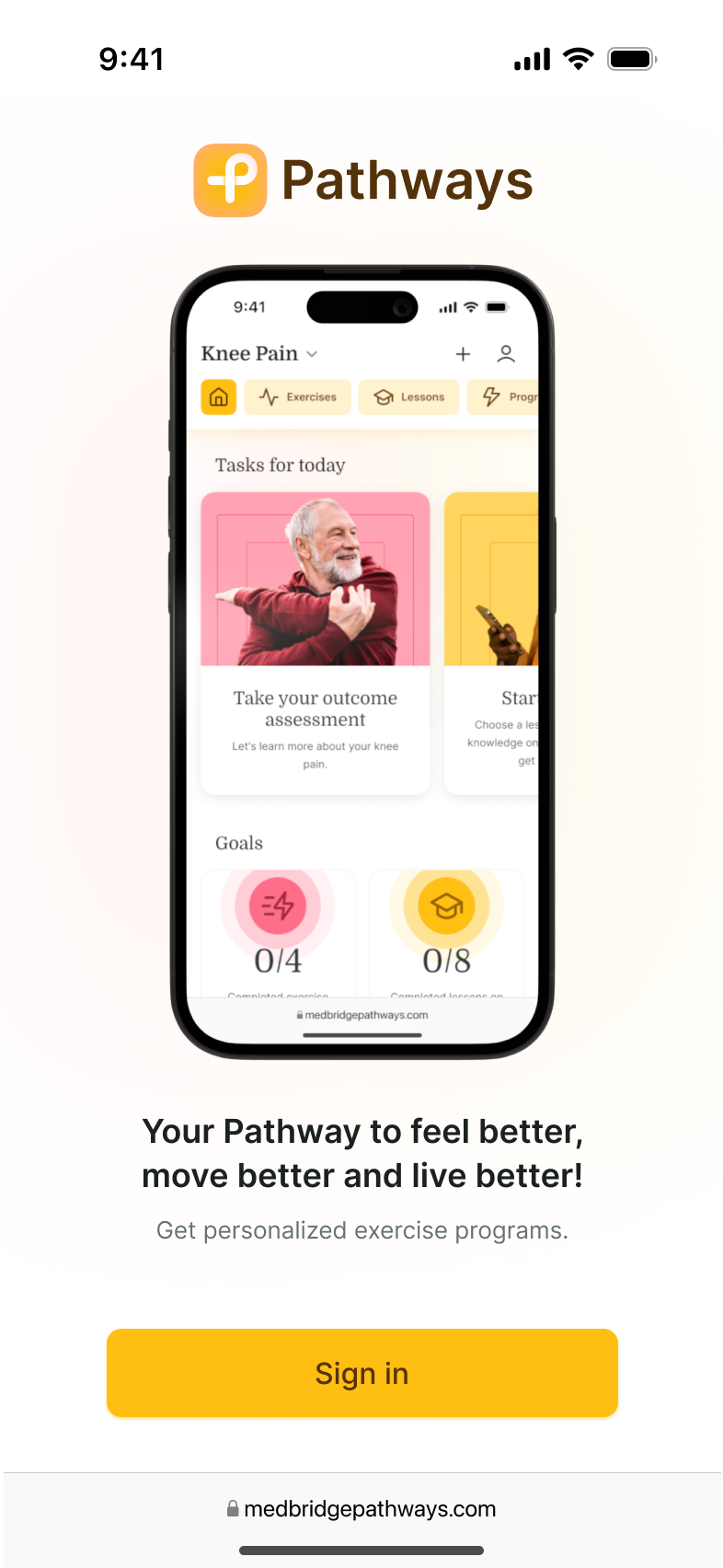
MedBridge Pathways helps patients recover through personalized care plans that combine exercises, education, and ongoing support.
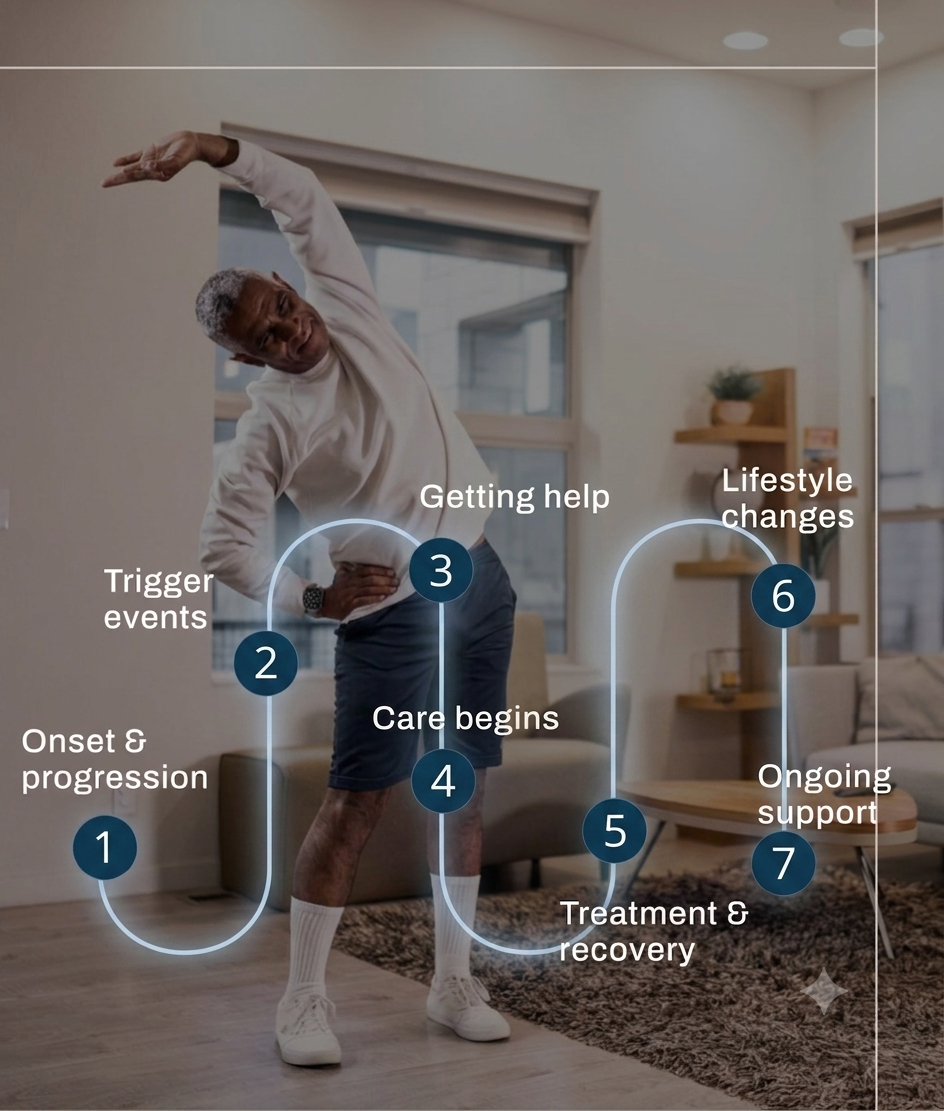
As healthcare organizations faced growing provider shortages, patients increasingly completed recovery independently between visits. However, many lacked confidence they were performing exercises correctly, while clinicians had limited visibility into patient progress.
I led product discovery and end-to-end design for an AI-assisted motion analysis experience that explored how AI could improve confidence, support clinical decision-making, and help scale care delivery.
Business Context
Aligning patient confidence with scalable care.
Business Goals
Expand digital care beyond clinic visits
Explore AI-assisted care delivery
Improve provider efficiency
Validate a new strategic product opportunity
User Needs
Know if they're moving correctly
Understand recovery progress
Receive clear, trustworthy feedback
Stay connected with their provider
The Challenge
Building trust in AI, not just automation.
The challenge wasn't simply designing motion capture.
It was determining whether AI could meaningfully support recovery without replacing clinician expertise.
Early discovery surfaced several unknowns:
Would patients trust AI-generated feedback?
Could objective movement data increase confidence?
How should clinicians remain involved?
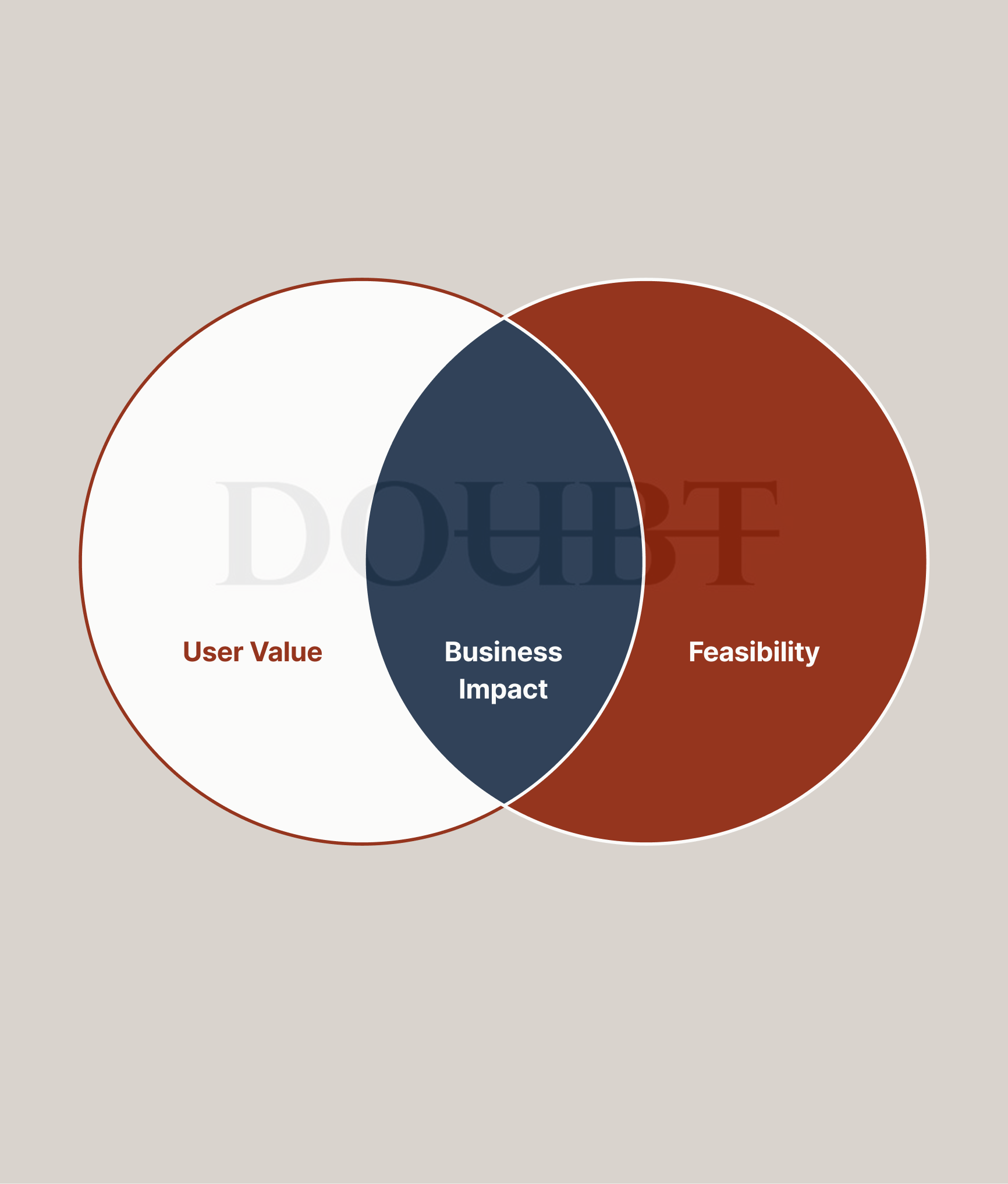
Was this opportunity worth investing in?
Product Leadership
Discovery changed the product direction.
Initial discussions centered around maximizing AI automation.
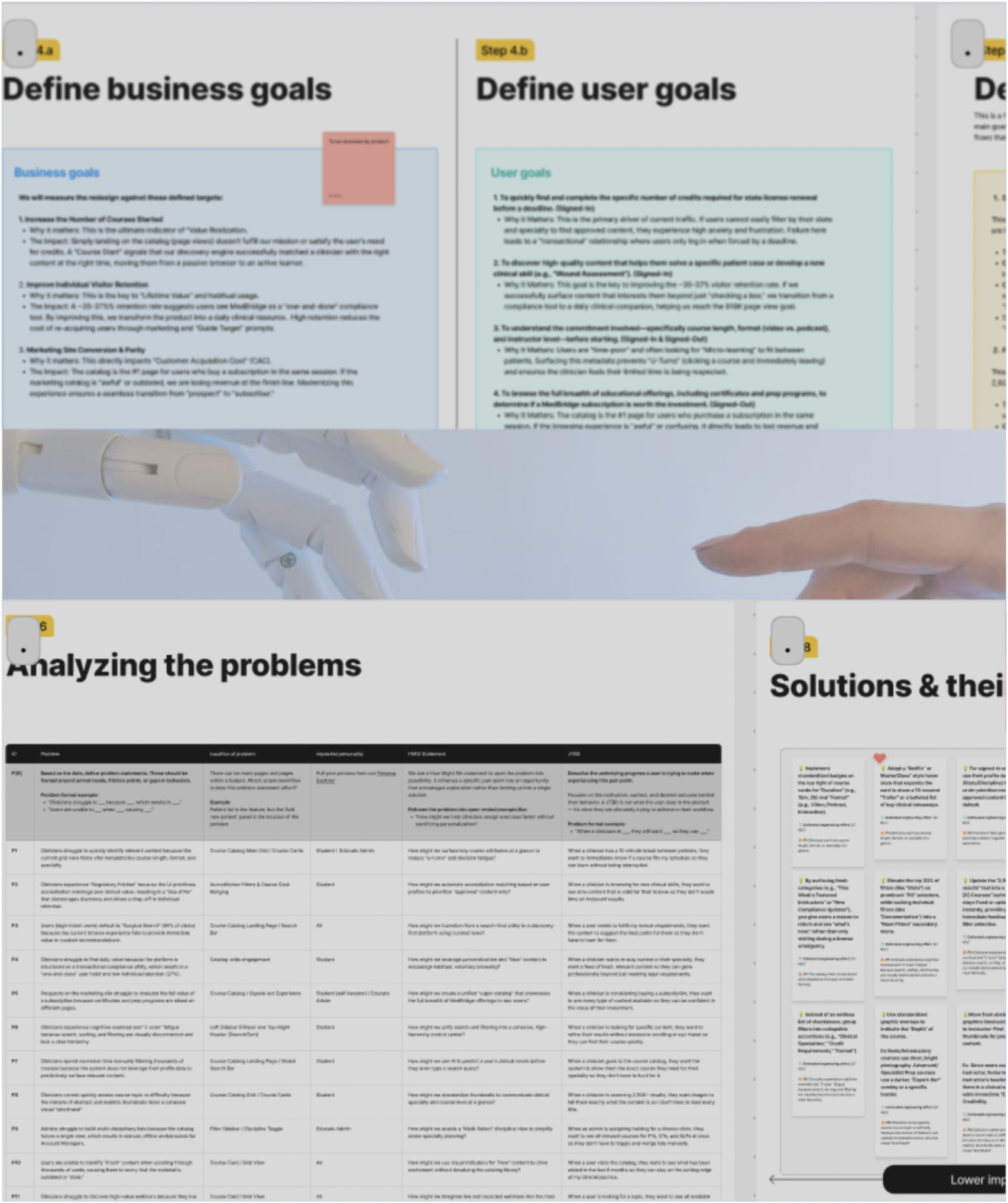
Through research, usability testing, and stakeholder workshops, I helped the team shift the conversation toward a different question:
How might AI help patients and clinicians make more confident care decisions?
Together, we established product principles centered on:
Guidance
Confidence
Clinical Safety
These principles became a shared framework for product decisions and roadmap prioritization.
Solutioning
Designing AI that feels supportive, not authoritative.
Rather than replacing clinician expertise, the experience focused on increasing confidence through transparent, explainable interactions.
Key design principles included:
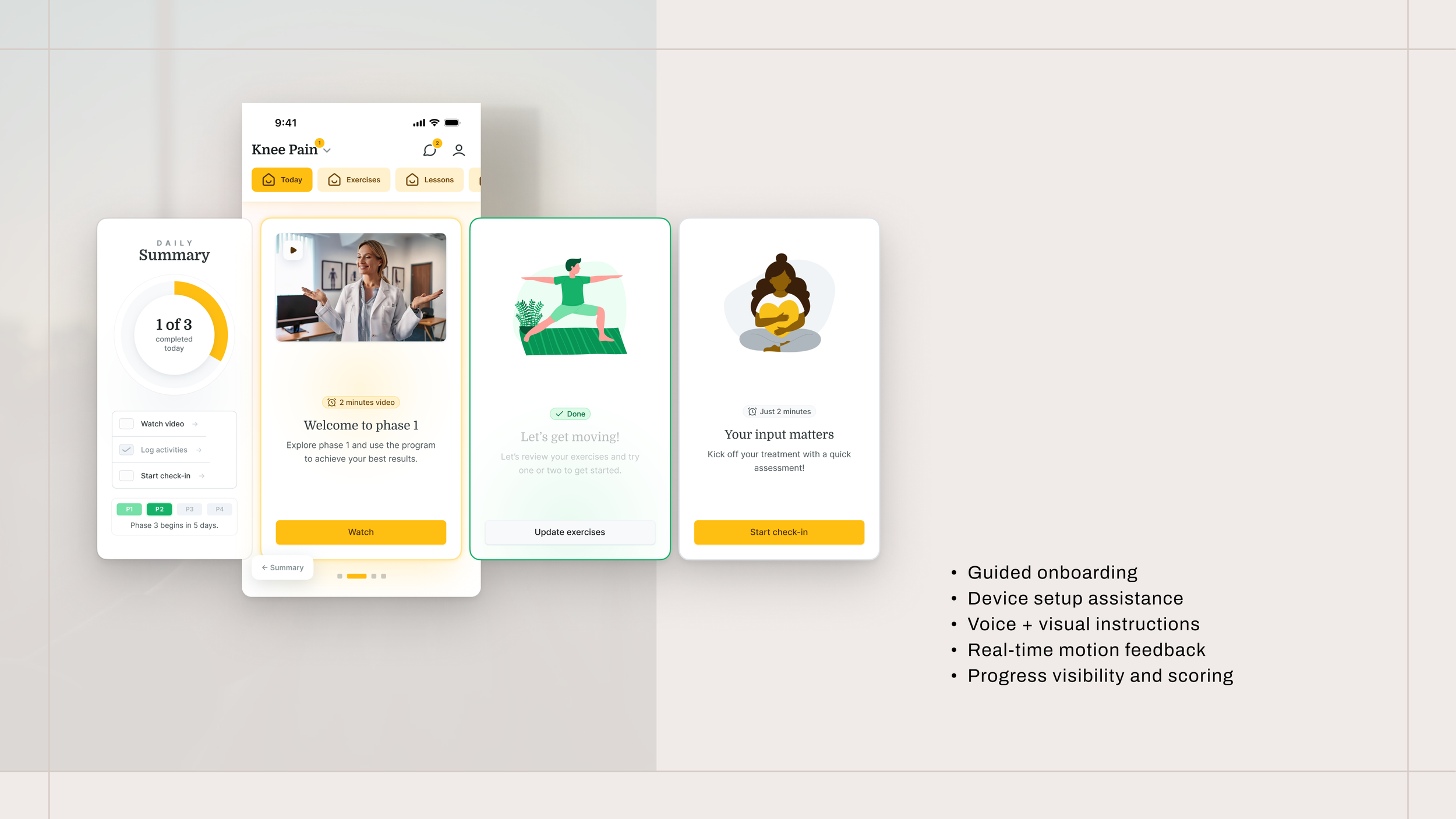
Guided assessments
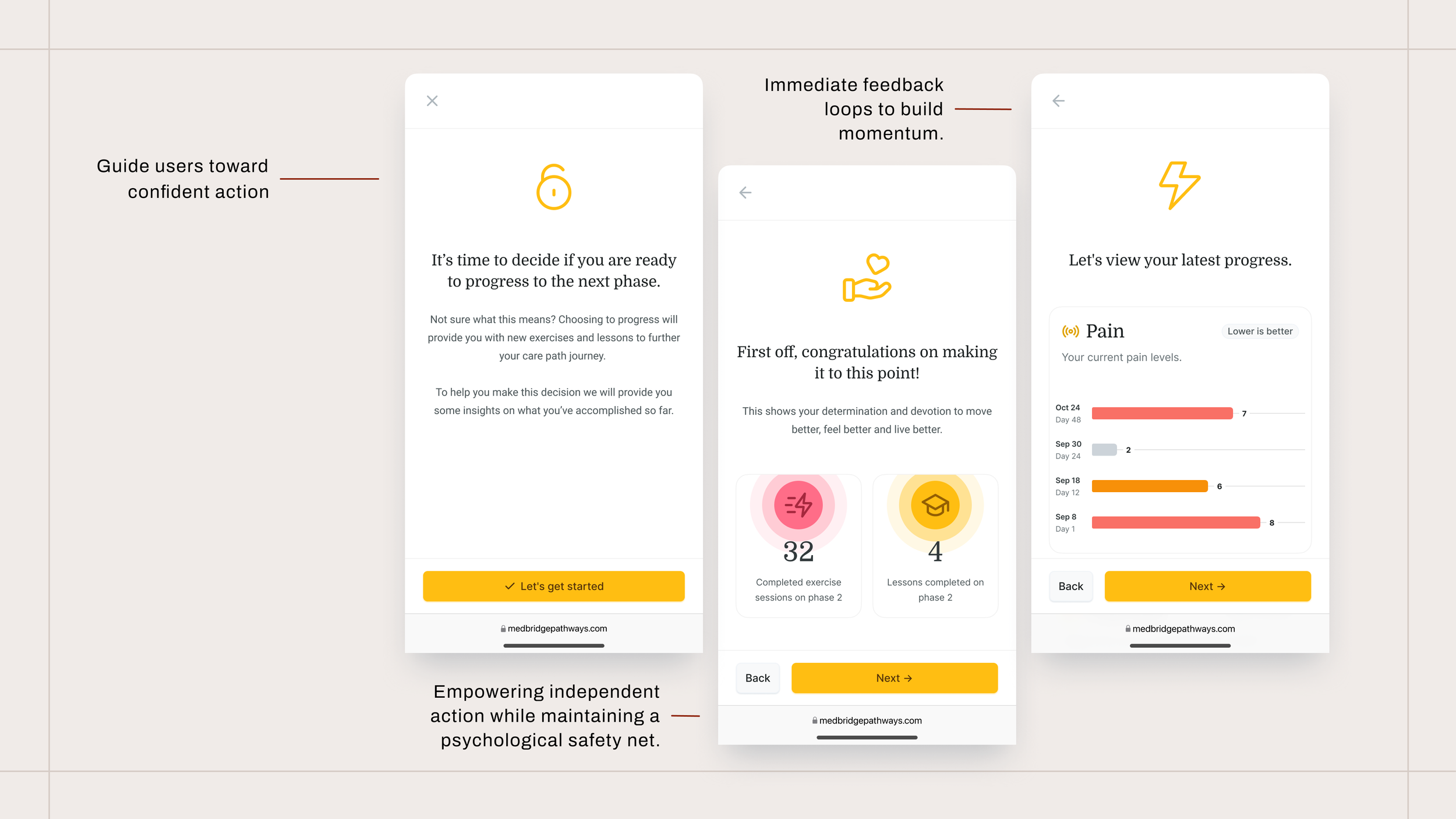
Explainable AI feedback
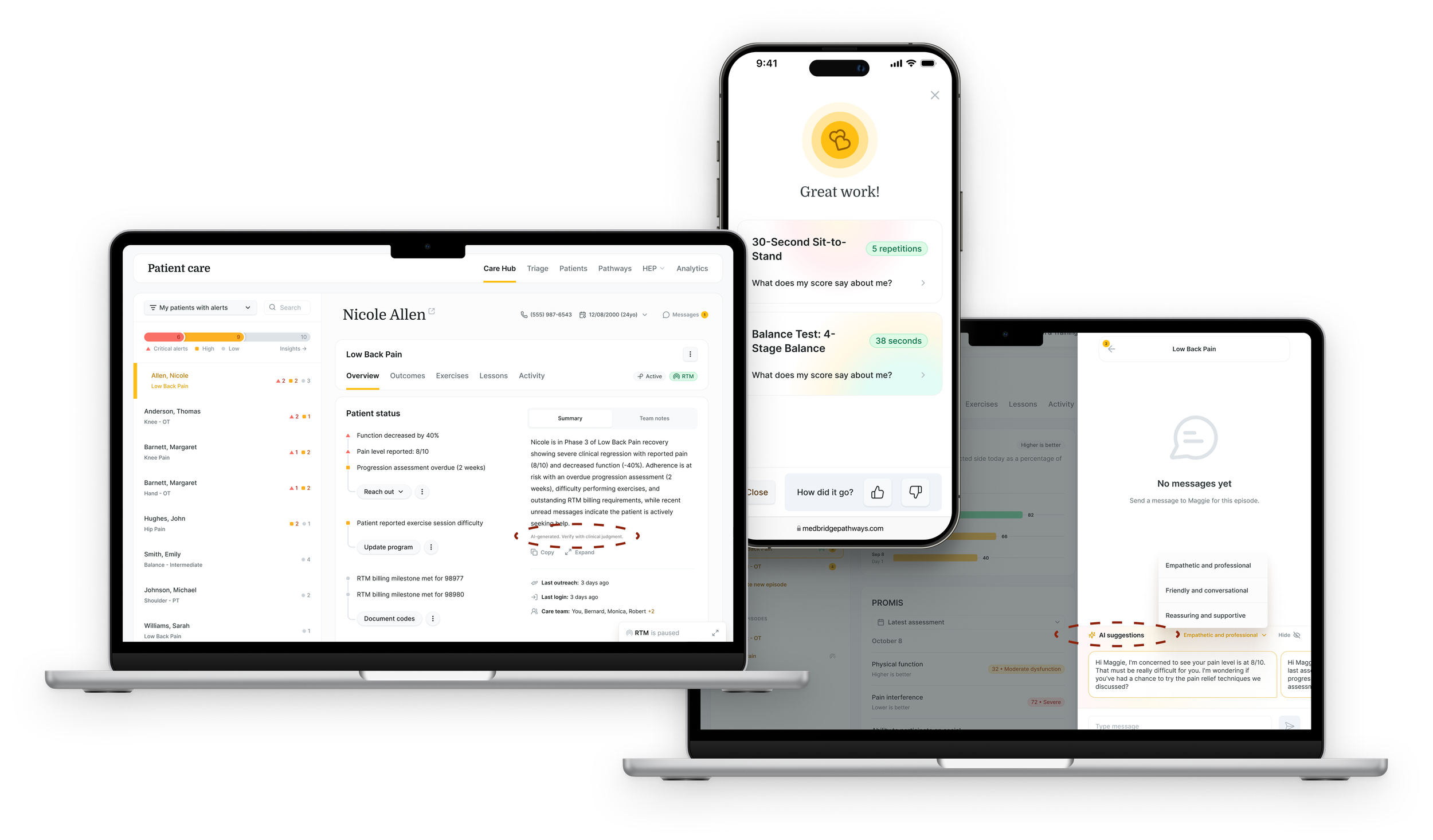
Clinical safety guardrails
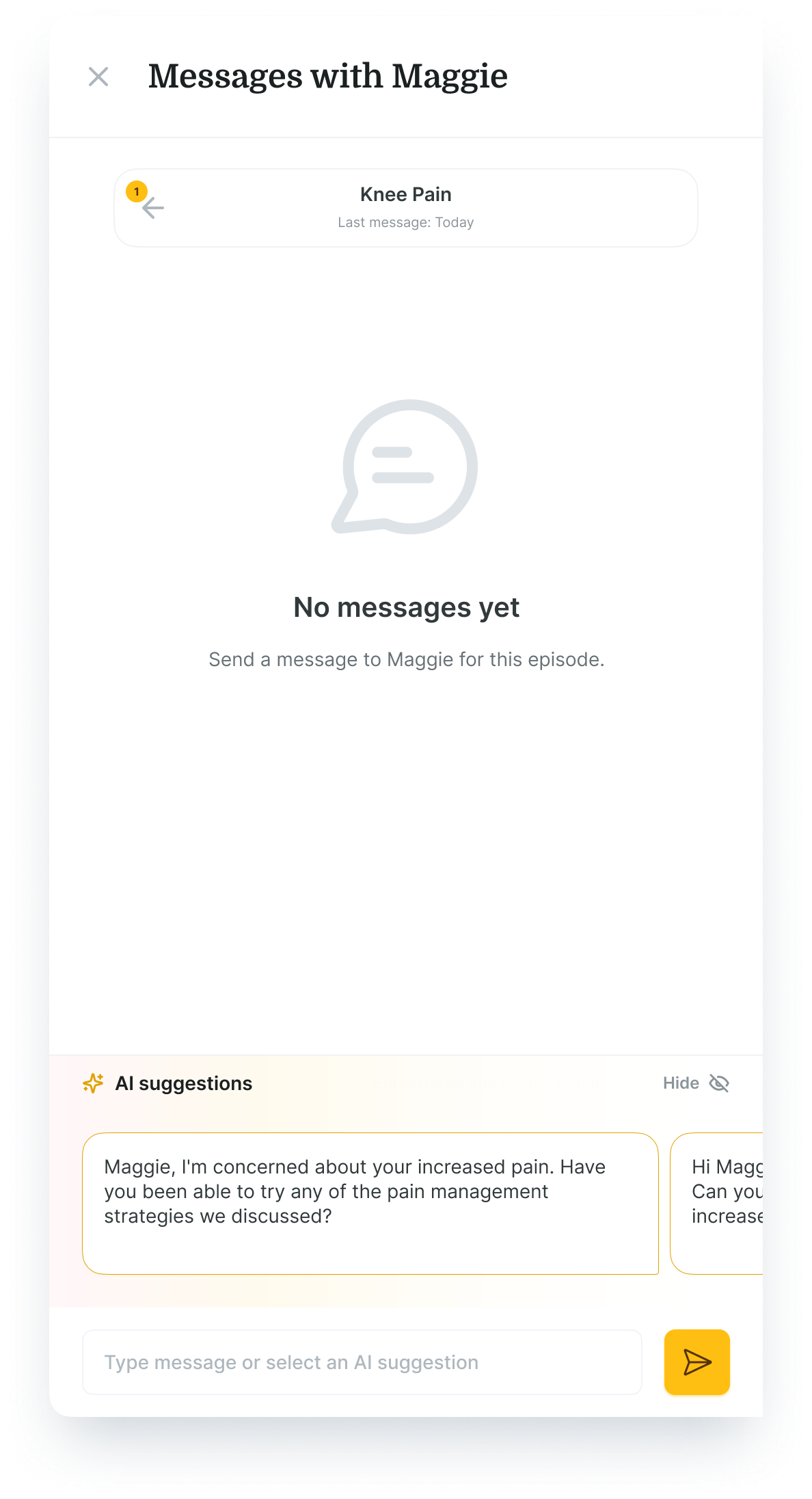
AI-assisted messaging and clinician summaries
To rapidly explore concepts, I used AI-assisted workflows to generate interaction patterns, compare onboarding approaches, and accelerate early ideation before validating designs through usability testing and cross-functional collaboration.
Final Experience
Patients receive guided movement assessments and understandable AI feedback, while clinicians gain summarized insights to support remote care decisions.
Outcomes
User Impact
92% Task Completion
Users successfully completed guided home assessments independently with minimal technical support.
85% Confidence Score
Real-time movement feedback increased user confidence throughout the assessment experience.
Product & Business Impact
Validated Product Strategy
Discovery and usability testing shifted the product direction from AI automation toward AI-assisted guidance before significant engineering investment.
Established a Scalable Foundation
Created reusable interaction patterns and clinician workflows that informed future AI initiatives across the platform.

Leadership Impact
Beyond designing the experience, I helped shape the product strategy.
By facilitating cross-functional workshops, aligning stakeholders around research, and defining shared design principles, I helped the team shift from building an AI-powered feature to solving a meaningful user problem. Those principles became a common framework for prioritization and roadmap decisions throughout the project.
Reflection
The biggest lesson wasn't how to design AI, it was learning how to design trust.
People didn't want AI making decisions for them; they wanted AI to help them make better decisions. Designing for transparency, guidance, and clinician oversight ultimately created a stronger product than pursuing automation alone.
Want to see how these decisions evolved?
During interviews, I walk through the research, trade-offs, stakeholder alignment, and engineering decisions that shaped the final product.